
Strategic Agility Key to Business Value
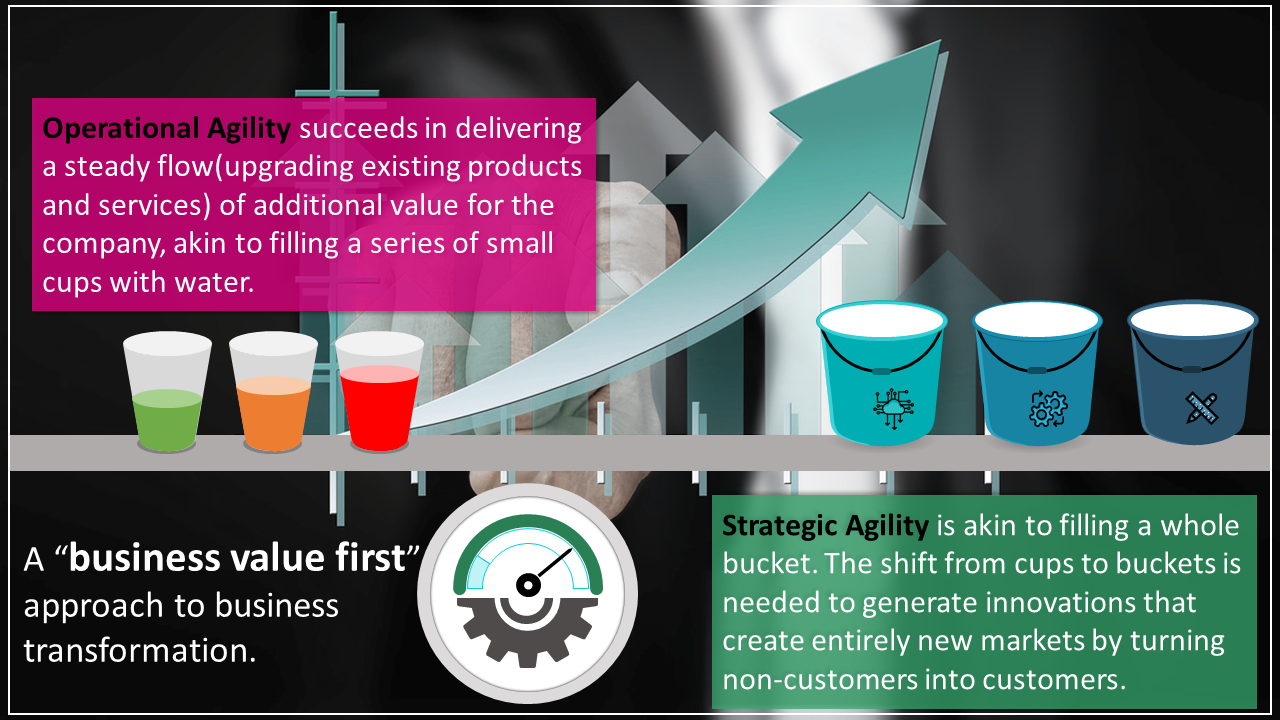
💡 It's all about strategic agility now – that's how we really drive value.
Today’s business landscape moves faster than ever—fueled by tech shifts, customer demands, and tight budgets. The days of rigid, five-year plans and "set-it-and-forget-it" strategies are over. The real differentiator now? Strategic agility—your ability to sense change early, pivot quickly, and execute with confidence.
Why Strategic Agility Matters
Your strategy isn’t just a plan. It’s your organization’s ability to continually align purpose, people, and performance with changing conditions. It’s not about reacting faster. It’s about leading change before it happens—from your core values out to your digital investments.
Companies that master this agility don’t just survive disruption—they lead it. According to research I explore in my book Innovating Beyond Limits, companies with strategic agility are more likely to:
Deliver innovation faster
Align their teams more effectively
Reduce the hidden costs of legacy systems
Outperform competitors on customer experience and adaptability
From Static Plans to Strategy-in-Motion
Traditional strategy assumes a fixed target. But today’s targets move. Customers shift. Tech evolves. Regulations tighten. If your strategy doesn’t move with them, you’re playing catch-up.
Instead of treating strategy as a one-time roadmap, treat it like a living flow. Think in terms of learning cycles: Plan → Test → Learn → Adapt.
In my ITIM framework, this idea is core—strategy must evolve, not just be executed. Strategic agility means we’re always scanning, sensing, adapting, and scaling what works.
Common Agility Killers (and What to Do About Them)
Here are the usual suspects that block agility—and what agile leaders do instead:
Rigid Culture
Problem: Fear of failure, silos, slow decisions.
Fix: Build a culture that rewards experimentation, rapid learning, and small bets. Failure isn’t a risk—it’s feedback.Misaligned Funding
Problem: Annual budgets that lock you into static priorities.
Fix: Shift to “agile funding”—smaller bets tied to learning outcomes. Invest in pilots, validate, then scale.Legacy Systems (and Thinking)
Problem: Tech debt holds back innovation.
Fix: Regularly assess and retire aging systems. Empower your teams to call out tech friction early. Don’t just innovate—clean as you build.Disconnected Strategy and Execution
Problem: Great ideas don’t reach customers.
Fix: Use cross-functional teams, and bring IT into strategy early. IT shouldn’t be an order-taker—it’s a co-creator of business value.
Leadership in an Agile Era
Agile leaders don’t have all the answers—they create the space for better answers to emerge.
They:
Set direction, not instructions
Empower teams to make decisions
Focus on outcomes, not just activities
Make learning part of the rhythm of business
Leadership isn’t about holding the reins tighter—it’s about setting the pace and clearing the path.
Five Moves to Build Strategic Agility
Here’s what you can start doing today:
Define your purpose clearly.
Why do you exist beyond profit? Purpose is the anchor that guides agility. Without it, every shift feels random.Simplify decision-making.
Push authority closer to the edges. The frontline sees reality first—trust them with it.Align around outcomes.
Make sure everyone knows the problem they’re solving. Let them figure out the how.Build modular capabilities.
Whether it's tech, teams, or strategy—design in ways that can flex and evolve.Fund agility.
Don’t just budget for stability. Fund innovation. Fund failure. Fund the unknown.
Rethinking ROI: Beyond Shareholders
Agile strategy expands how we define success. It’s not just about shareholder return. It’s also about value to employees, customers, partners, and the planet. This broader lens makes your strategy more resilient and your brand more trusted.
Final Word: Agility Is the Strategy
Strategic agility isn’t just how you execute your plan—it is the plan. In a dynamic world, your ability to adapt IS your advantage.
The good news? You don’t need to start from scratch. You need to start where you are, shed what no longer serves, and move with clarity.
The future belongs to the fast, but also the focused.
Let’s build that future—strategically, and with agility.
